Personal Trainer vs Strength Coach, Which Do You Actually Need at 55?
They sound interchangeable. They aren't. One is a generalist; the other is a discipline-specific practitioner. Here's what the difference looks like in practice, and which is the right fit for a 55-year-old professional.
In this article
The direct answer
At 55, a qualified strength and conditioning (S&C) coach is the better-fitting practitioner for most clients. The discipline is built around structured, data-driven, recovery-aware programming, which matches the constraints of an over-50 body more cleanly than generalist PT. A personal trainer (PT) can produce excellent results with the right methodology and post-graduate training, but the default S&C coach has a deeper-published-evidence-base practice for the patterns over-50 bodies typically present. The difference matters most when there’s a history of injury, a desk-job movement pattern, or a longevity-focused goal, three patterns that describe most 55-year-old senior professionals.
The credential difference
Side-by-side, the typical qualifications stack:
| Personal Trainer (PT) | Strength & Conditioning Coach (S&C) | |
|---|---|---|
| Core qualification | Level 2 PT certification (foundational) | BSc in Strength & Conditioning Science |
| Advanced qualification | Level 3 PT certification | UKSCA ASCC, NSCA CSCS, ASCC |
| Required hours of supervised practice | None | UKSCA: 360 hours; NSCA: 300+ hours; ASCC: 600 hours |
| Written assessment | Course-based | Independent exam (UKSCA, NSCA both have rigorous written exams) |
| Practical assessment | Course-based | Independent practical (UKSCA assessment is famously demanding) |
| Regulator | CIMSPA (voluntary) | UKSCA, NSCA, or ASCC accreditation bodies |
| Published evidence base | General fitness literature | Peer-reviewed S&C journal literature |
| Re-validation requirement | Continuing professional development (CPD) | Same, but typically tied to specific S&C CPD hours |
Most personal trainers in London hold a Level 3 PT certification. A subset hold additional accreditations (Pre/Post-Natal, Older Adult, Corrective Exercise). The strength and conditioning route is a separate qualification pathway: typically a 3-year BSc in S&C Science followed by years of supervised coaching to earn the UKSCA accreditation. The depth of the qualification reflects the depth of the practice.
Important caveat: the credentials matter, but they aren’t the whole picture. A 15-year-experienced PT with a strong evidence-based methodology can outperform a newly-qualified S&C coach on any given case. The credential tells you the floor of competence; the practitioner’s actual practice tells you the ceiling.
The programming difference
Where the two practices diverge most visibly:
Programming structure
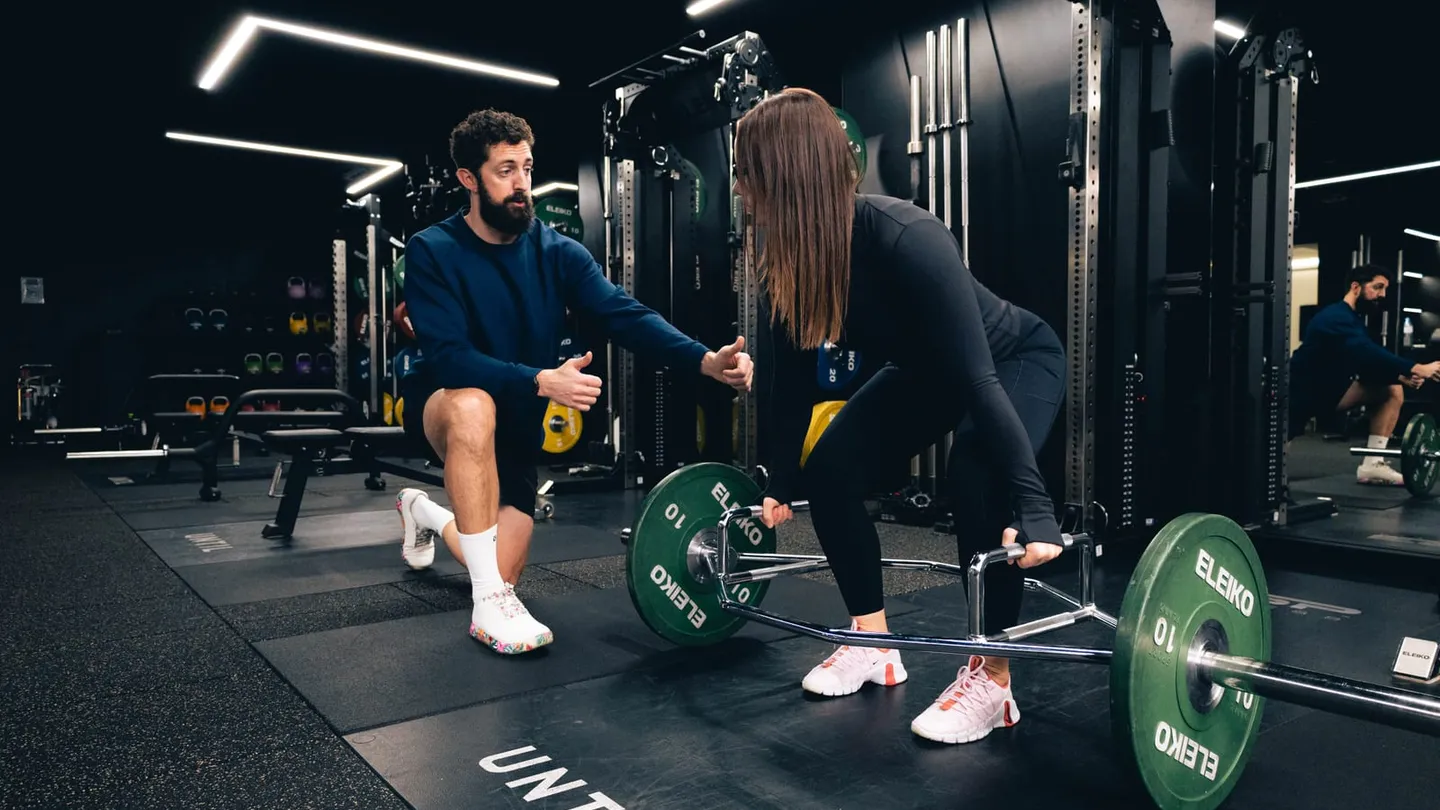
A typical PT designs sessions session-by-session, often inside the session itself: adjusting based on how the client feels that day, what equipment is available, what the client asks for. This is responsive but unstructured. Progress over 12 months is often visible on individual lifts but inconsistent across the body’s capacities as a whole.
An S&C coach designs in 4 to 8 week blocks, each with a distinct emphasis. Block 1 might be general preparation (movement quality, base capacity, technical work). Block 2 might be strength development. Block 3 might be consolidation and re-test. Each block has a planned starting load, planned progression, and planned end-point markers. The pattern is more rigid but produces compounding results across 18 to 24 months.
Programming driver
A typical PT programmes from client preferences and the trainer’s instincts. “What do you want to work on today? Let’s do legs.” Within reason this works, and for some clients, particularly self-motivated experienced trainees, the autonomy is valuable.
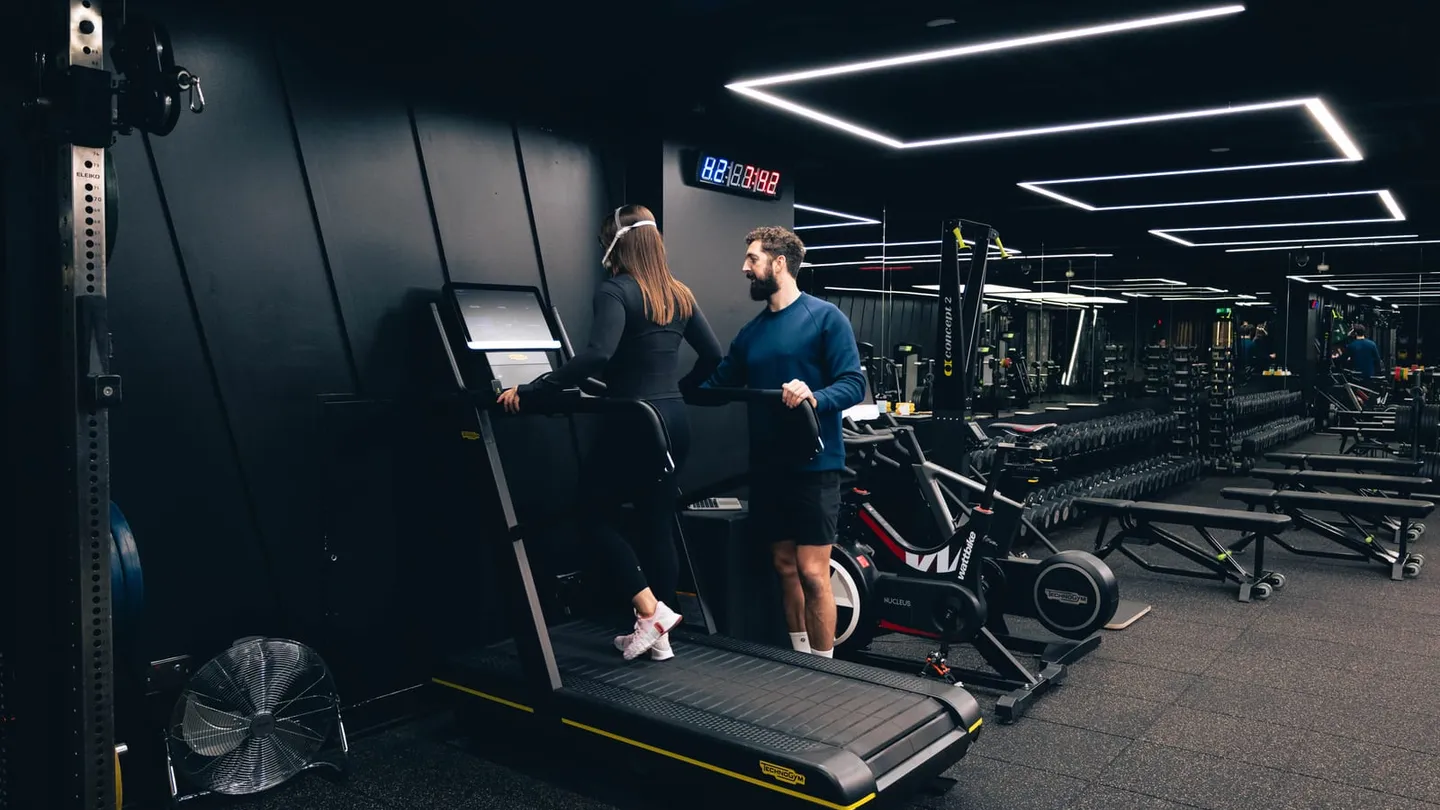
An S&C coach programmes from assessment data. The starting point is a structured movement and capacity assessment (Matt’s Longevity Assessment is the version of this for London-based clients) that produces objective baselines on movement quality, strength, cardiovascular capacity, and lifestyle. The data is the input; the programme is the output. Client preferences are factored in but don’t drive the design.
Recovery treatment
Most PT programmes treat recovery as an interruption: the client missed a session, we’ll make it up next week. Sleep, stress, and recovery feedback are noted but not used to adjust the programme.
S&C programming treats recovery as a programmable input. Weekly check-ins on sleep, training-day stress, and subjective performance drive load adjustments. A poor sleep week reduces the planned load; a high-stress week shortens the planned volume. The programme adapts; the client doesn’t have to push through fatigue to maintain consistency.
Re-assessment cadence
A typical PT relationship rarely involves structured re-assessment. Improvements are measured by what feels heavier or how the client looks. This is subjective and easy to lose track of over months.
An S&C relationship includes structured re-assessment every 4 to 6 months (the same movement screen, the same capacity tests, the same data points) to track progress objectively. The data informs the next block’s emphasis and confirms whether the previous block worked.
When a PT is the right choice
Three client patterns suit a generalist PT well:
- General-fitness clients without complex history. Healthy 30-year-old with no injury history wanting to feel stronger and look better: a competent PT delivers excellent results. The programming complexity an S&C coach adds isn’t required.
- Clients who value flexibility over structure. Some clients dislike the rigidity of block-based programming and prefer session-by-session adaptability. A PT who programmes responsively is the right format.
- Budget-constrained training relationships. PT pricing is typically lower than equivalent S&C pricing, and for clients who need basic supervision rather than deep methodology, the difference in cost matters.
When an S&C coach is the right choice
Three client patterns suit a structured S&C coach more cleanly:
- Adults over 50 wanting longevity-focused training. The S&C literature is the body of published research most aligned with longevity training. Programming around the 50/50 Standard and the Peter Attia framework is what S&C coaches train for.
- Clients with injury history or complex constraints. A history of back, knee, shoulder, or hip problems requires programming that respects the constraints. S&C training is the route where the assessment and constraint-aware programming methodology is most developed.
- Senior professionals with demanding schedules. Travel-resilient programming, recovery-aware load adjustment, structured blocks that survive deal-flow season: these are S&C strengths. A typical PT relationship is less adaptive to the actual constraints of senior professional life.
The honest case for both
Many clients benefit from periods with both. A typical pattern at UNTIL Bishops Square:
- Initial 12-week block with a structured S&C coach: establish movement quality, build the strength baseline, learn the compound lifts properly.
- Self-led training period for 6 to 12 months: apply the framework independently, train consistently at lower cost.
- Periodic check-in every 6 to 12 months: re-assessment + a programming refresh + the next block’s emphasis.
This pattern produces the long-arc benefits of structured S&C without the ongoing 1-to-1 cost. It also suits adults who value structured autonomy: they want the methodology and the periodic data input, not the hands-on supervision in every session.
What both practices share
Worth being honest about: the things that matter most in adult training aren’t unique to either practice.
- Consistency over years matters more than any single session’s intensity.
- Compound lifts at appropriate load are the backbone of both practices.
- Recovery, sleep, and nutrition drive 60% of the outcome in either case.
- Avoiding injury is more valuable than chasing aggressive progression.
A PT who respects these principles outperforms an S&C coach who ignores them. The qualification is a signal, not a guarantee. The right question isn’t “is this person a PT or an S&C coach”: it’s “does this person’s methodology and practice align with what my body needs across the next decade?”
What Matt does
For full transparency: Matt Alexander practises as a Strength and Conditioning Coach with a BSc in Strength & Conditioning Science (Outstanding Academic Achievement Award in Biomechanics, on research into elite rowing biomechanics), Precision Nutrition Level 2 certification, and twelve years of coaching senior professional clients in the City of London. The practice is built around the assessment-first, block-based, data-driven methodology described in this article.
The Longevity Assessment is the entry point: £299 for a structured 90 to 120 minute screen across the six markers that actually matter, plus the strength baselines. The output is a written Results Review that maps the client’s capacity onto the framework. From there, the coaching pathway (1-to-1, online, or self-led) suits the client’s life and goals.
If you want the depth of an S&C-trained practice, that’s what’s on offer. If a generalist PT relationship is the better fit for your needs and budget, that’s also a legitimate choice: the question is matching the practitioner to the client, not assuming one is universally better than the other.
Frequently asked questions
What's the difference between a personal trainer and a strength coach?
A personal trainer is a generalist fitness practitioner, typically holding a Level 2 or Level 3 PT certification, working across goals from weight management to body composition to general fitness. A strength and conditioning (S&C) coach is a discipline-specific practitioner, typically with a BSc in S&C Science and a UKSCA, NSCA, or ASCC accreditation, applying the published science of physical preparation. PT programmes vary with the trainer's instincts; S&C programmes are structured into blocks driven by assessment data.
Do I need a strength coach at 55, or is a personal trainer enough?
For most 55-year-olds, a qualified S&C coach is the better fit. The discipline is built around structured, data-driven, recovery-aware programming, which matches the constraints of an over-50 body more cleanly than generalist PT. A good PT can produce excellent results if they have post-graduate strength and conditioning training and an evidence-based approach. The difference matters most when there's a history of injury, a desk-job movement pattern, or a longevity-focused goal. S&C is where the published evidence base is strongest for those cases.
What qualifications should I look for in a strength coach?
The two strongest UK credentials are UKSCA accreditation (UK Strength and Conditioning Association: accredited coach designation, ASCC) and an undergraduate or postgraduate degree in Strength and Conditioning Science. The UKSCA requires a relevant degree, supervised coaching hours, written exam, and practical assessment. Look also for membership of CIMSPA, accreditation by NSCA (US-based but recognised), and ongoing engagement with peer-reviewed S&C literature. A Level 3 PT alone is not equivalent.
Is a strength coach more expensive than a personal trainer?
Typically yes: partly because the qualifications take longer to earn, partly because the programming time per client is higher. London PT pricing ranges roughly £60 to £150 per session depending on the trainer's experience and the gym setting. Qualified S&C coaches typically sit in the £100 to £180 range per session, with most clients on multi-session packs that produce a lower per-session cost. The price difference reflects the depth of the practice; the value depends on whether you need the depth.
Can a personal trainer help with back pain?
A good PT with evidence-based training can help with non-specific lower-back pain. The published evidence (NICE NG59, Cochrane reviews) supports structured strength training as the first-line treatment for adult LBP. The qualification matters less than the methodology. A PT who programmes hip-dominant compound lifts at appropriate load with structured progression can produce good outcomes. The risk is generic PT programmes that ignore the desk-job movement pattern (hip flexor tightness, weak glutes) and add load on top of dysfunction, which makes back pain worse rather than better.
What does an S&C coach do that a PT typically doesn't?
Three things. First, **structured assessment** before any programming: a paid 60 to 90 minute movement screen + capacity test rather than a free intro session. Second, **block-based periodisation**: programmes structured into 4 to 8 week blocks with distinct emphases (general preparation, strength development, consolidation), each ending with structured re-test. Third, **recovery as programmable input**: sleep, stress, and subjective recovery feedback drives weekly adjustments rather than being noted-and-ignored. None of this requires the S&C qualification, but in practice, it's where the qualification produces a difference.
Does a 1-to-1 session look different with a strength coach vs a PT?
On the surface, often not: both look like a 60-minute compound-lift session. The difference is in the **programming behind the session** (what's the block emphasis, why this load this week, what's being measured) and the **post-session work** (data logging, recovery monitoring, next-block planning). A PT typically programmes within the session; an S&C coach programmes around the block and the client's data. The difference compounds across 12 to 24 months of consistent training.