Peter Attia Style Training in London: What the Centenarian Decathlon Actually Means in Practice
Peter Attia's longevity framework is the most cited reference point in over-50 strength training. Here's what it actually means, how to apply it in a London-based practice, and where most coaches misapply it.
In this article
The direct answer
Peter Attia style training as practised in a structured London coaching environment means programming organised around Attia’s four longevity pillars: cardiovascular fitness (Zone 2 + VO2 max), strength (compound lift baselines), stability and mobility, and metabolic health, with capacity targets back-calculated from what the client wants to be able to do in their eighth and ninth decades. It is not a brand, a trademark, or a specific programme. It is a methodology for treating longevity as a trainable outcome, anchored in published clinical and exercise-science evidence. Done well, it produces measurably different outcomes from generic gym training. Done badly, it is a marketing label slapped on the same programmes.
Where the framework comes from
Peter Attia is a Stanford-trained physician whose 2023 book Outlive re-framed adult longevity as a trainable outcome. His core argument: the difference between an active 85-year-old and a frail 85-year-old is not luck. It is the slope of capacity decline across the previous three decades: a decline that is largely modifiable through structured training and lifestyle decisions made between 40 and 60.
The framework names this window the Marginal Decade: the decade between 75 and 85 (roughly) when residual capacity determines whether the client is independent, mobile, and engaged or limited, dependent, and declining. The programming question follows: what level of capacity at 50 do I need to still be capable in my Marginal Decade?
This produces a simple but unusual framing. Most strength training is structured around the client’s current goals: losing weight, feeling stronger, looking better. Attia-style training is structured around the client’s future capacity: being able to do the things they want to do at 85. The mechanics of training are similar; the targets are different.
The four pillars
Attia’s framework operates on four trainable pillars, each with its own measurement and prescription:
1. Cardiovascular fitness: Zone 2 + VO2 max
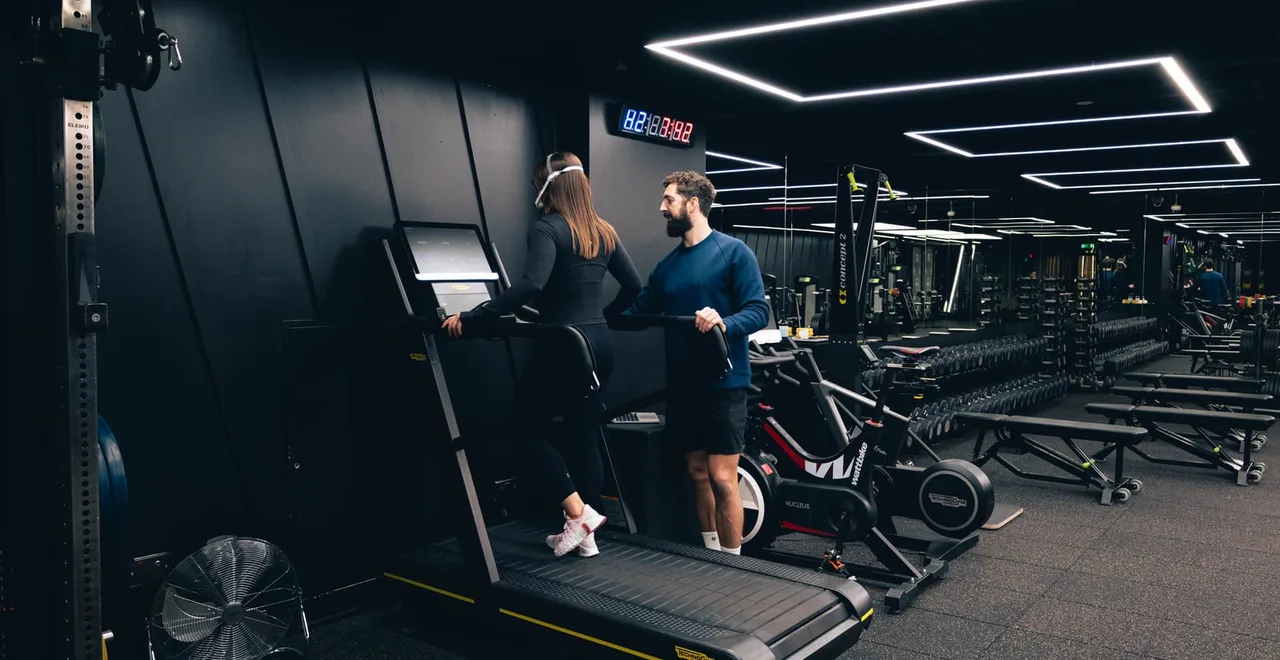
Zone 2 is the aerobic intensity where mitochondrial density and fat oxidation are developed: typically 60 to 70% of maximum heart rate, the intensity where you can hold a conversation but not sing. The prescription: 2 to 4 sessions per week of 30 to 45 minutes on a bike, rower, or fast walk. The point is the volume of mitochondrial work, not the intensity.
VO2 max (peak aerobic capacity) is the strongest published correlate with all-cause mortality after 50. The prescription: one short-duration high-intensity session per week (the 4×4 Norwegian protocol is the most studied: four minutes at near-maximum effort, four minutes recovery, repeated four times).
Most 50-year-old senior professionals are dramatically under-trained on both fronts: not because they don’t exercise, but because no one has ever asked them to do Zone 2. Twenty minutes on a stationary bike at conversational pace doesn’t feel like a workout; it produces more measurable cardiovascular adaptation than the equivalent in higher-intensity work.
2. Strength: compound lifts at capacity
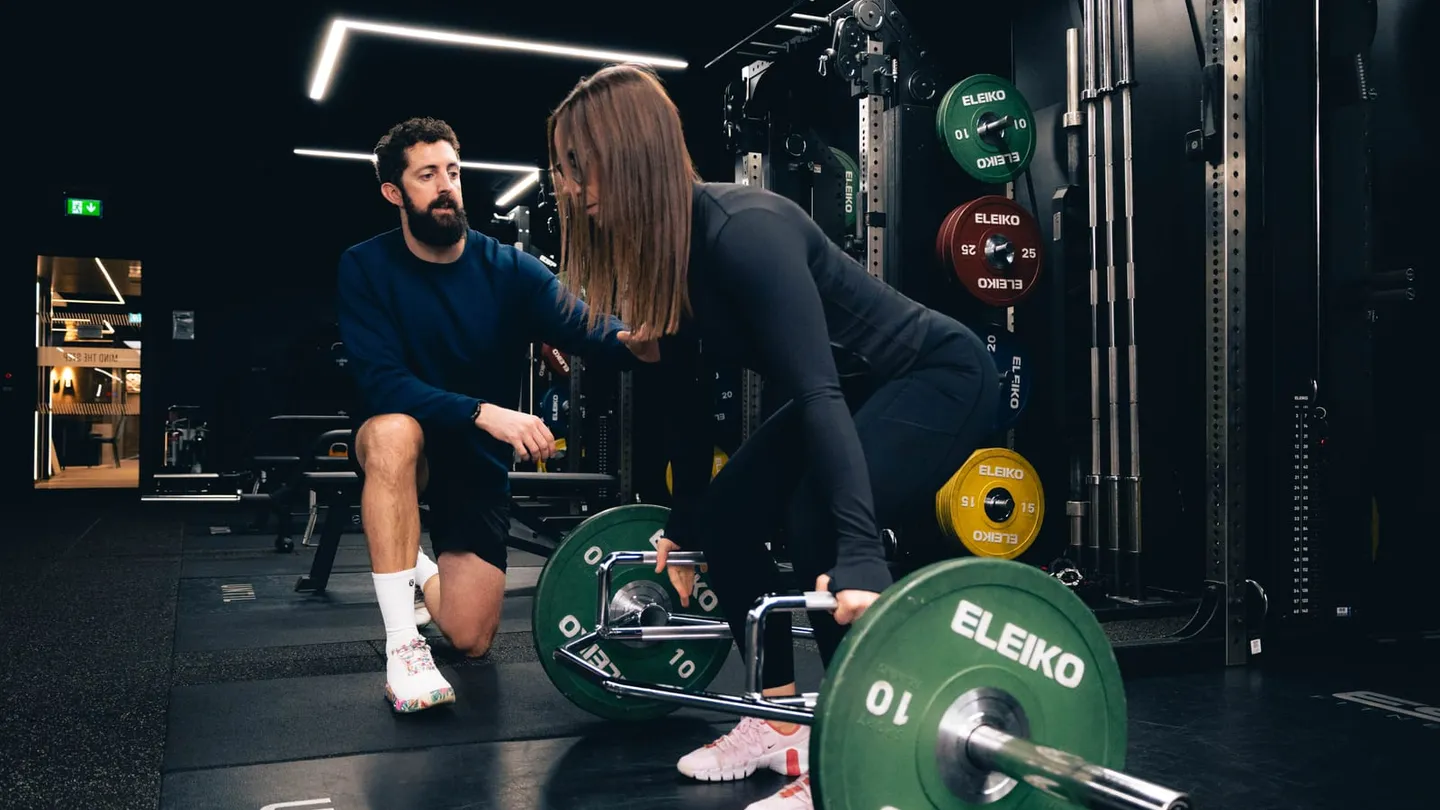
Attia is explicit that strength is the harder-to-recover pillar and matters more than the cardio hours per week. The prescription: 2 to 3 structured strength sessions per week, organised around the compound lifts (deadlift, squat, press, hinge, carry).
The strength targets (measured at age 50, calibrated for capable independence at 85) sit alongside Matt’s 50/50 Standard benchmarks: deadlift bodyweight, squat 0.75x bodyweight, overhead press 0.5x bodyweight, farmer carry bodyweight for 60 metres. Hitting these at 50 leaves enough headroom for the natural age-related strength decline to still leave the client capable at 75.
3. Stability and mobility
This is the most commonly under-emphasised pillar in adapted practice. The framework specifies deliberate stability and mobility work: single-leg balance, joint range under load, foot strength, dynamic stability through the full ankle/knee/hip kinetic chain. Single-leg work, balance training, and mobility flows are programmed as their own block, not as warm-up filler.
The Attia framework is explicit that the stability pillar is the cheapest insurance against falls after 70, and falls are the dominant cause of catastrophic functional decline in the eighth and ninth decades. Programming for it at 50 is dramatically more effective than trying to add it at 70.
4. Metabolic health
The fourth pillar tracks the markers that determine metabolic resilience: resting metabolic rate, body composition, insulin sensitivity, lipid panel, blood pressure. Some of these are programming-modifiable (RMR responds to strength training; body composition responds to combined strength + nutrition; insulin sensitivity responds to all four pillars). Others are tracked as outcome metrics that confirm whether the programme is working.
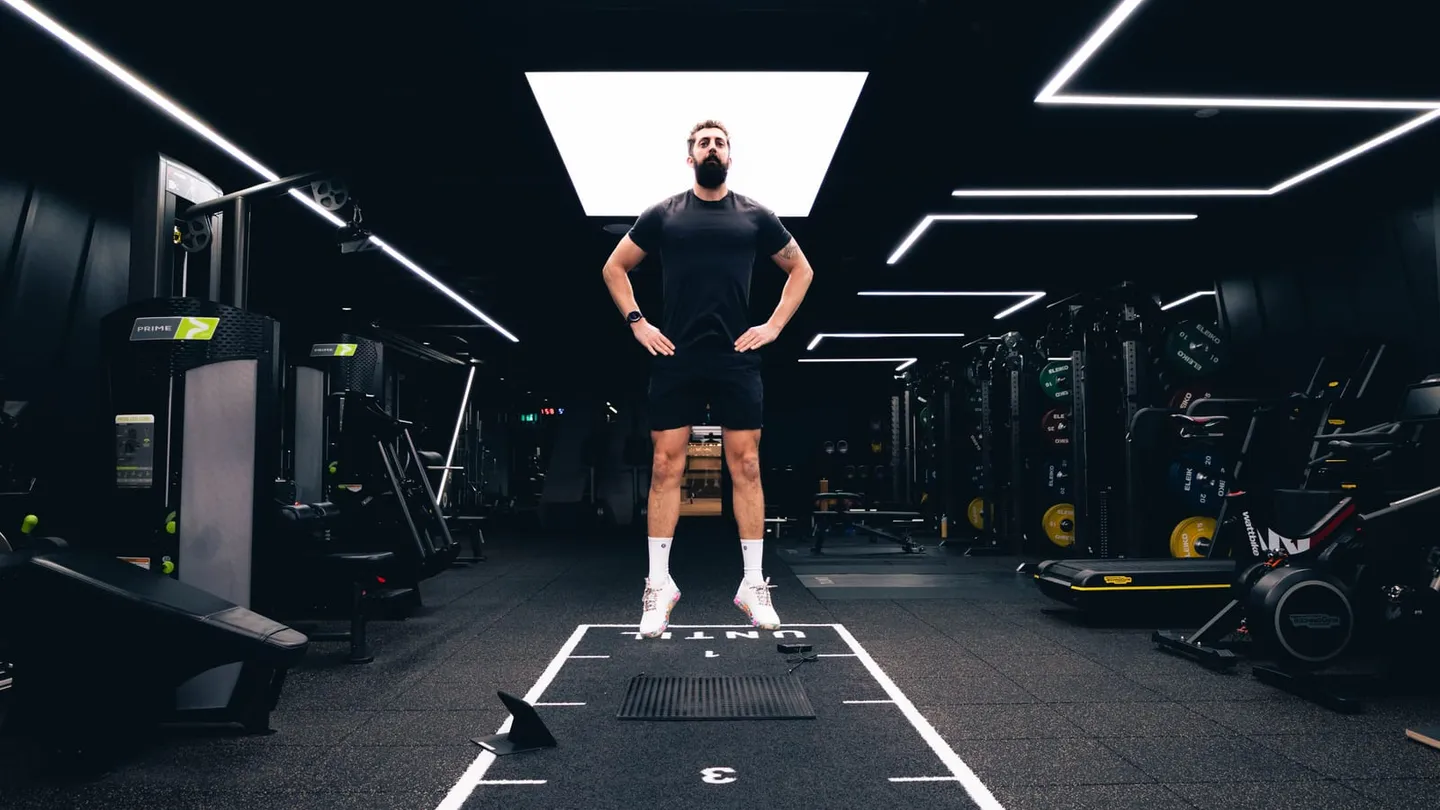
Matt’s Longevity Assessment directly measures VO2 max (via a Watt bike MOT or step test), plus grip strength, countermovement jump, blood pressure, waist-to-hip ratio, lifestyle factors, and functional movement: the markers that anchor the framework in practice.
The Centenarian Decathlon
Attia introduces a concept he calls the Centenarian Decathlon: a list of specific physical capacities the client wants to retain into their nineties. Examples:
- Carry a 25 kg suitcase upstairs without assistance
- Hike for two hours on uneven terrain with grandchildren
- Get up off the floor without using hands
- Lift a 25 kg grandchild overhead
- Step up onto a 0.5 m platform without aid
- Travel internationally (carry luggage, manage time-zone changes, recover from disrupted sleep)
The framework works backwards from these items. What capacity do I need at 85 to do this? → What capacity do I need at 50 to still have that at 85? The age-50 targets become the programming priorities.
The list is client-specific. A grandfather who wants to play football with grandchildren is a different programming problem from a partner-level executive who wants to keep travelling internationally into his eighties. The framework produces different programmes for both because the target capacities differ.
Where most coaches misapply the framework
Three common errors observed in coaching practice that claims an Attia-style label:
1. Treating it as a marketing label, not a methodology. The framework is detailed and specific: four pillars, named protocols, measurable targets. A coach who advertises “Attia-style training” but actually delivers the same generic gym programme they always have isn’t applying the framework; they’re using the name.
2. Over-weighting Zone 2 cardio. Attia’s Zone 2 prescription is genuinely important but it has become a meme. Coaches who triple the Zone 2 volume and de-emphasise strength produce a fitter aerobic engine attached to a weakening body. Attia is explicit that strength is the harder pillar and matters more.
3. Ignoring stability and mobility. The single most under-trained pillar. Coaches will program four months of compound lifting and Zone 2 and never explicitly train single-leg balance, foot strength, or controlled joint range. The framework treats stability as equal in priority to the other three pillars; most adapted practice treats it as warm-up filler.
How a London coaching practice applies it
A structured Attia-informed programme at UNTIL Bishops Square looks like this:
| Week | Sessions | Pillars covered |
|---|---|---|
| Monday | Strength A: lower body + posterior chain (60–75 min) | Strength + Stability |
| Tuesday | Zone 2 cardio: 30–45 min bike or fast walk | Cardiovascular |
| Wednesday | Stability + mobility block: 30 min focused work | Stability + Mobility |
| Thursday | Strength B: upper body + vertical/horizontal pull (60–75 min) | Strength + Stability |
| Friday | (rest) | : |
| Saturday | Mixed: Zone 2 (45 min) + short VO2 max protocol (4×4) | Cardiovascular + VO2 max |
| Sunday | (rest) | : |
Total: 5 sessions, ~4 to 5 hours total. All four pillars trained inside the week. Metabolic markers tracked at every 6-month re-assessment. Programme adapts on the data.
This is what the framework looks like when actually applied: not a marketing label, a structured weekly distribution of training stimulus across the four pillars, calibrated to the client’s age-50 baseline.
Where to start
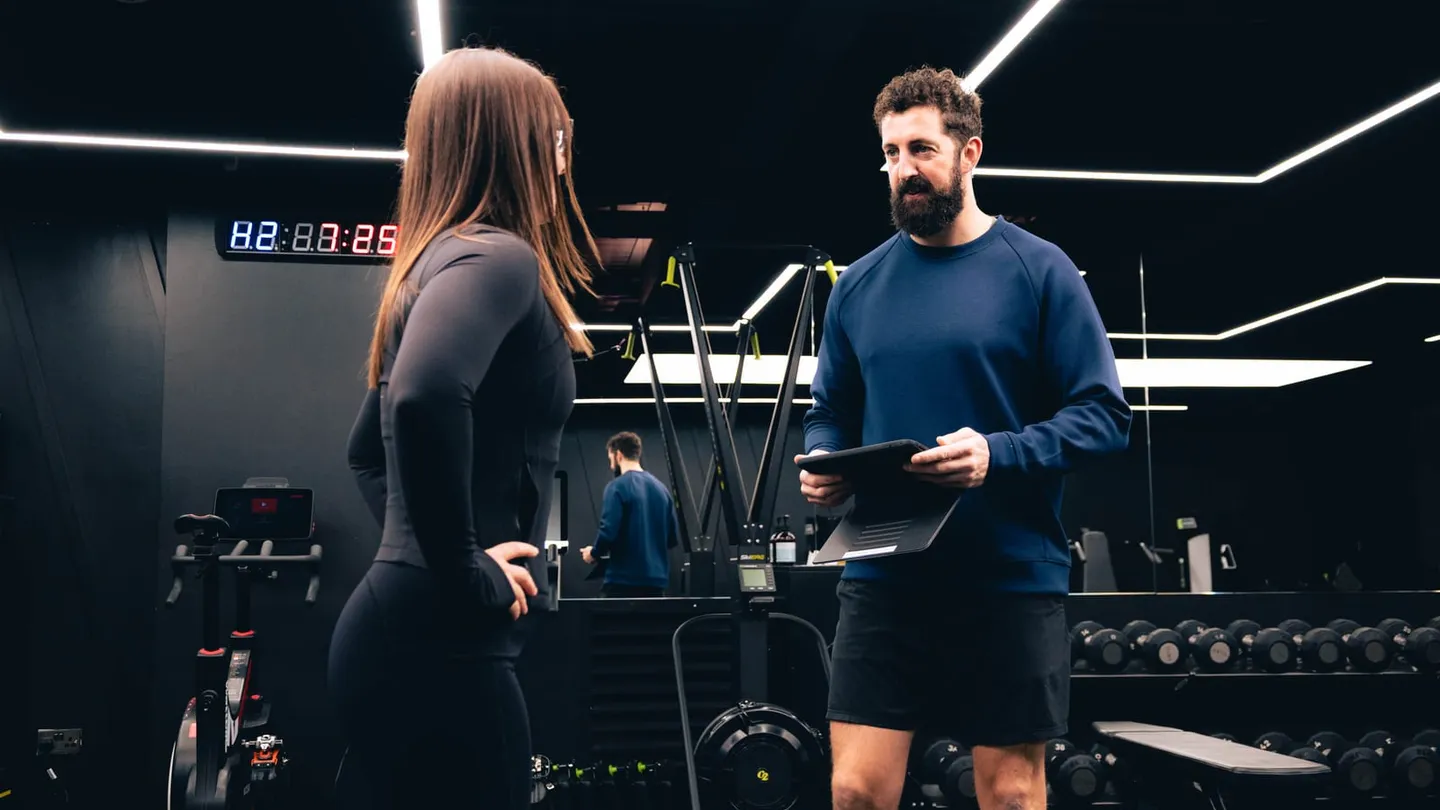
Every Attia-informed coaching pathway at UNTIL Bishops Square starts with the Longevity Assessment: the structured 90 to 120 minute measurement of where the client sits today on each of the framework’s pillars. £299, no obligation to continue. The Results Review maps the client’s current capacity against the age-50 targets and identifies the next training block’s priorities.
For clients outside London or with frequent travel, the Virtual Longevity Assessment covers the same framework via guided remote testing: £199, same Results Review structure.
The framework is broad and the implementation is client-specific. The right starting point is the data, not the programme.
Frequently asked questions
What is Peter Attia style training?
Peter Attia is a Stanford-trained physician whose book Outlive (2023) frames longevity as a trainable outcome: specifically, a set of physical capacities measured at age 50 that predict independent function at 85. His framework has four pillars: cardiovascular fitness (specifically Zone 2 + VO2 max), strength (compound lift baselines), stability/mobility, and metabolic health. 'Peter Attia style training' as practised in coaching means programming structured around these four pillars, with capacity targets back-calculated from what the client wants to be able to do in their eighth and ninth decades.
What is the Centenarian Decathlon?
The Centenarian Decathlon is Peter Attia's name for the specific physical capacities a client wants to retain into their nineties: typically things like carrying a 25 kg suitcase upstairs, hiking with grandchildren, getting up off the floor without assistance, lifting a child overhead. The framework works backwards: identify the activity, identify the physical capacity required at age 85, then identify the level of that capacity needed at age 50 to still have it at 85. Programming is then directed at the age-50 capacity targets.
How is Peter Attia style training different from regular strength training?
The mechanics (compound lifts, progressive overload, structured cardiovascular work) are familiar. What's different is the framing and the prioritisation. Cardiovascular capacity (Zone 2 + VO2 max) gets equal billing with strength rather than being an afterthought. Stability work (single-leg balance, joint range under load) is programmed deliberately rather than only as a warm-up. Metabolic markers (RMR, blood pressure, waist-to-hip ratio) are tracked alongside the lifts. Most generic gym programmes ignore at least two of the four pillars.
Where do most coaches misapply the framework?
Three common errors. First, treating it as a marketing label rather than a programming methodology: claiming 'Attia-style' without actually structuring around the four pillars. Second, over-emphasising Zone 2 cardio while under-emphasising strength: Attia is explicit that strength is the harder-to-recover pillar and matters more than the Zone 2 hours. Third, ignoring stability and mobility: programming compound lifts at heavy load without addressing the joint range and single-leg balance that make those lifts safe at 70. Done well, the framework is balanced across all four pillars.
Is Peter Attia style training right for someone in their fifties?
Yes, and arguably more right than for any other age group. The framework is specifically designed for the 40 to 60 age band: the window when training decisions made now determine functional capacity at 75 to 85. Younger adults can train less deliberately and still produce good outcomes; older adults often have less recovery to absorb mistakes. Fifties is the cohort where structured longevity training compounds most.
What does Zone 2 training mean in practice?
Zone 2 is the aerobic intensity where the body is burning fat as the primary fuel and lactate has not yet started to accumulate: typically 60 to 70% of maximum heart rate, or the intensity where you can hold a conversation but not sing. In practice for over-50 clients: 2 to 4 sessions per week of 30 to 45 minutes, on a bike, rower, or fast walk. The point is the volume of mitochondrial work, not the intensity. Most 50-year-olds are dramatically under-trained in Zone 2 simply because no one has ever asked them to do it.
How does the Longevity Assessment relate to the framework?
The Longevity Assessment measures the data the framework operates on: the markers (blood pressure, grip strength, countermovement jump, waist-to-hip ratio, lifestyle factors, functional movement, and VO2 max via a Watt bike MOT or step test) plus the strength baselines across the major lift patterns. Output is a written Results Review that maps your current capacity onto the framework's age-50 targets: where you sit today, where the gaps are, and what the training programme needs to prioritise. £299, 90 to 120 minutes.